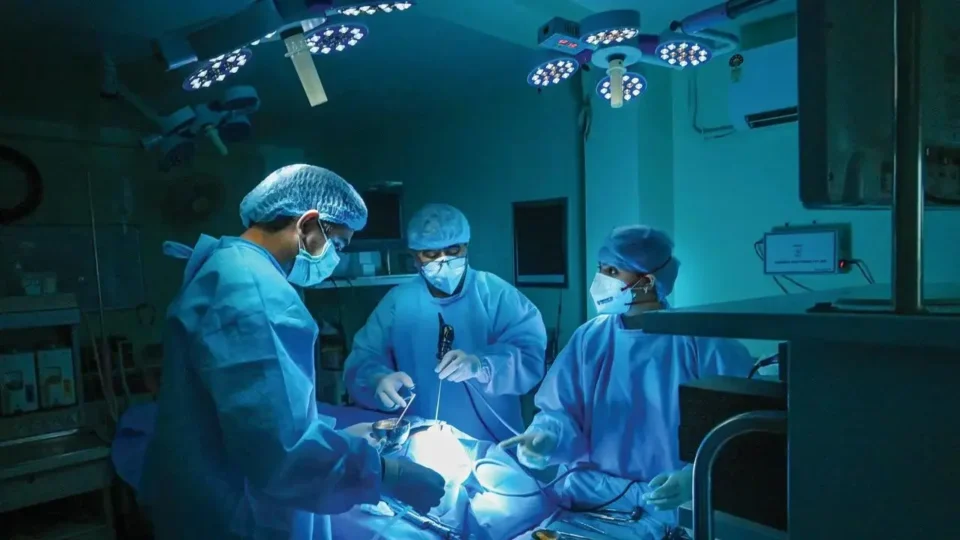
A team doctors in Navi Mumbai has brought renewed hope to a 28-year-old woman living with Sjögren’s syndrome-associated ganglionopathy, a rare neurological complication of the autoimmune disease. With a previous history of autoimmune myositis, she endured a long and painful journey marked by severe dry eyes and mouth, muscle weakness, fatigue, imbalance, numbness, and progressive loss of mobility that left her unable to perform routine daily activities independently.
After consulting multiple hospitals, the patient and her family were told that treatment options were limited and there was little hope for meaningful recovery. Following a personalised cell-based therapy and comprehensive rehabilitation program at StemRx Hospital & Research Centre, she is now showing encouraging improvements, including reduced stiffness, improved mobility, and the ability to walk with support, leading to a better quality of life.
Diagnosis of the condition
Taniya Modak Paik, resident of Kolkata, experienced an unusual pulling sensation while walking in 2018. She consulted many doctors who assured her that nothing was wrong and was given vitamin supplements that provided temporary relief. After two months, she experienced tightness in the left leg, which was managed temporarily. In 2022, after her marriage, the stiffness returned, affecting her right leg. By 2023, her condition worsened, and she experienced severe weakness, balance problems, couldn’t climb stairs, or carry out her daily activities independently. Further she was on wheel chair for four years. She also travelled to Bengaluru in December 2023, wherein a muscle biopsy confirmed the diagnosis of autoimmune myositis, a condition wherein the body’s immune system mistakenly tends to attack healthy muscles, leading to muscle inflammation. Unfortunately, even after steroid therapy, her symptoms continued to progress, causing discomfort.
Four to five months later, she was diagnosed with Sjögren’s syndrome, which explained her neurological symptoms along with persistent dryness of the eyes and mouth and loss of taste. The patient then underwent plasmapheresis in May 2024. Moreover, she was also advised monoclonal antibody therapy and Rituximab infusions in 2025 and even continued taking medications under medical supervision. However, her condition continued to worsen, eventually leaving her wheelchair dependent. Though the patient was determined to seek relief and came to know about research centre and decided to consult Dr. Pradeep Mahajan.
Dr Mahajan, who is the founder of the research centre, said, “Sjögren’s syndrome is an autoimmune disorder wherein the body’s immune system mistakenly attacks its own moisture-producing glands, causing persistent dryness of the eyes and mouth. In some patients, however, the disease extends beyond these symptoms and affects the nervous system, causing neurological complications such as ganglionopathy, wherein the sensory nerves get damaged. This can further lead to loss of sensation, poor balance, difficulty walking, muscle stiffness, weakness, and even coordination problems that can slowly take away a person’s independence. Although medications help control the autoimmune process, neurological recovery can remain challenging, making long-term rehabilitation and individualised treatment essential. The exact cause of Sjögren’s syndrome is not fully understood. It is believed to occur when the body’s immune system mistakenly attacks its own healthy glands and tissues.
A combination of genetic factors, hormonal influences, and environmental triggers such as viral infections may contribute to the development of the disease. Sjögren’s syndrome and autoimmune myositis are both conditions where the immune system mistakenly attacks the body’s own tissues, and they can sometimes occur together. In some people, Sjögren’s can cause muscle pain and weakness that looks similar to myositis, making it difficult to tell them apart at first. With detailed blood tests, scans, and sometimes a muscle biopsy, doctors can determine whether it is Sjögren’s alone, myositis, or a combination of both.
He further added, “Sjögren’s syndrome affects approximately 1–10 people per 1,000, making it one of the more common autoimmune diseases. It is an autoimmune condition that primarily attacks the body’s exocrine glands, including the salivary, tear, and vaginal glands, leading to dryness of the mouth, eyes, vagina, skin, and nasal passages. The diagnosis was confirmed through a comprehensive evaluation that included a detailed assessment of symptoms, blood tests for specific autoimmune antibodies, eye and saliva function tests, and, where required, a minor salivary (lip) gland biopsy. Taniya was enrolled in a personalised, research-based regenerative medicine and rehabilitation program designed according to her neurological condition, previous treatment history, and functional limitations. The integrated treatment approach focused on reducing inflammation, supporting immune function, improving muscle strength, and enhancing overall quality of life. Her program included cell-based living drug therapy, along with targeted and supercharged exosomes to support natural tissue repair and improve communication between cells. Mitochondrial therapy was incorporated to enhance cellular energy production and help reduce fatigue. The treatment plan also included structured rehabilitation, physiotherapy, and individualised nutritional support to restore muscle strength, improve mobility, address nutritional deficiencies, and promote recovery. This comprehensive, multidisciplinary approach contributed to significant functional improvement, enabling the patient to recover well and be safely discharged.
Dr Mahajan explained, “Within the first fifteen days of treatment, Taniya began experiencing encouraging changes. She noticed reduced gum bleeding, improved oral dryness, easier swallowing without needing water after every bite, relief from a persistent cough, reduced back pain and muscle stiffness, and gradual improvement in mobility. She is now able to get up from a chair more easily, take steps with the support of a stick, and slowly walk again, something that had become impossible after becoming wheelchair dependent. Physiotherapy is recommended for the patient to improve strength, balance, and confidence of the patient. If left untreated, Sjögren’s syndrome can lead to worsening muscle weakness, nerve damage, joint pain, severe dryness affecting the eyes and mouth, and, in some cases, damage to organs such as the lungs or kidneys. Early diagnosis and treatment help prevent these complications and improve quality of life. The patient is recovering well and has been discharged. Regular follow-up visits are important to monitor symptoms, adjust medications if needed, and check overall health. The patient has been advised to stay well hydrated, maintain good oral and eye care, take medications as prescribed, and report any new or worsening symptoms promptly.
Taniya shared, “For years, I struggled to look for answers while my condition slowly took away my freedom. My life changed from walking normally to needing support and then a wheelchair. The dryness, weakness, stiffness, and loss of sensation interfered with my daily routine. After visiting the research centre, I started seeing positive changes after years. The symptoms, such as dryness in my mouth, reduced, swallowing became easier; my stiffness started improving. Today, I can walk slowly again with support. Being able to stand up from a chair and take steps has given me confidence and hope that I had almost lost. I am thankful to Dr. Pradeep Mahajan and his team for helping me to recover well.”
Navi Mumbai docs give renewed hope to woman unable to walk normally