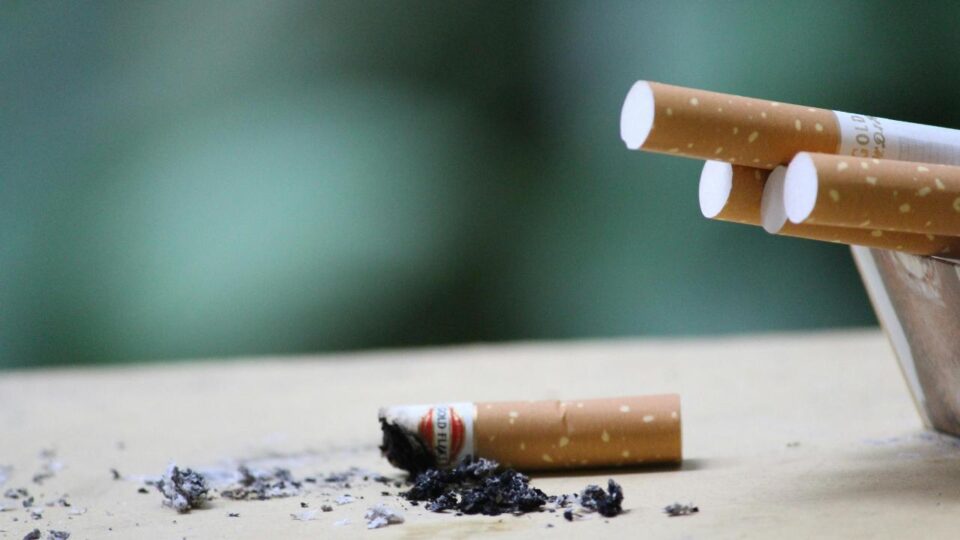
Herbal cigarettes, widely sold in India and abroad as natural, tobacco-free, and therapeutic alternatives to conventional cigarettes, are not safer than regular tobacco cigarettes — they produce emissions that can be comparably or even more damaging than tobacco smoke, according to a study.
Findings published in the Journal of Hazardous Materials present a comprehensive comparison of the physical, chemical, and oxidative properties of mainstream (firsthand) smoke from commercially available herbal and tobacco cigarettes in the Indian market, researchers said.
“Our findings challenge the widely held belief that tobacco-free means risk-free,” author Sameer Patel, an assistant professor at the Indian Institute of Technology Gandhinagar`s department of civil engineering and chemical engineering, said.
The researchers compared emissions from two of India`s best-selling tobacco brands and four popular herbal varieties containing combinations of basil, clove, cinnamon, mint, green tea, water lily, and chamomile.
“Emissions from herbal cigarettes are comparable to or exceeded those from tobacco cigarettes on nearly every metric we measured. Leaf-wrapped herbal variants turned out to be the most hazardous of all the samples tested,” Patel said.
The team noted that two of the herbal brands utilised tendu (ebony) leaves as wrappers, identical to those used in bidis, the country`s most widely consumed smoking product.
“Our findings indicate that the emissions characteristics of HCs (herbal cigarettes) matched or even exceeded those of TCs (tobacco cigarettes), suggesting that HCs are as hazardous as TCs and underscoring the urgent need for regulatory oversight guided by a comprehensive toxicological evaluation of herbal cigarettes,” the authors wrote.
“Sub-500 nm (nanometre) particle concentrations were (about) 20 per cent higher in HC than in TC,” they said and added that the fine particles are increasingly linked to cardiovascular and respiratory disease.
Each cigarette was combusted inside a sealed, automated two-chamber rig designed to replicate human inhalation rate.
The cigarette`s emissions were funnelled into real-time instruments, and filter samples were collected for physical and chemical characterisation of particles. As a proxy for the potential toxicity of emissions, the oxidative potential — which quantifies the smoke`s capacity to generate reactive oxygen species — of the collected samples was quantified.
Reactive oxygen species are aggressive molecules known to drive inflammation, lung tissue remodelling, and vascular changes underlying heart disease.
Particulate matter from herbal cigarettes were found to record a significantly higher oxidative potential, compared to that from tobacco cigarettes.
Tendu-leaf-wrapped variants, in particular, showed an oxidative potential roughly 49 per cent higher than paper-wrapped versions. A chemical analysis also revealed that one herbal cigarette, filled with basil, had the highest lead concentration, despite being marketed as “chemical-free with 100 per cent natural filler for a healthy lifestyle.”
“That finding is important because many consumers associate nicotine-free products with reduced harm,” author Vishal Verma, a research collaborator and an associate professor of environmental engineering in the US` University of Illinois, Urbana-Champaign said.
The study also reveals a regulatory gap problem surrounding herbal cigarettes. India`s Cigarettes and Other Tobacco Products Act, 2003 (COTPA) regulates tobacco products through warning labels, advertising restrictions, and public-smoking rules, but products marketed as tobacco-free often fall outside these frameworks. Comparable regulatory gaps exist in several other countries, the researchers said.
This story has been sourced from a third party syndicated feed, agencies. Mid-day accepts no responsibility or liability for its dependability, trustworthiness, reliability and data of the text. Mid-day management/mid-day.com reserves the sole right to alter, delete or remove (without notice) the content in its absolute discretion for any reason whatsoever.
Fumes from herbal cigarettes may be more damaging than those from regular ones